A working session · one hour · every department

Most office work is moving information from Point A to Point B.

Different paper, different systems, different people — but underneath, the same job wearing a different costume. Once you can see that shape, you start seeing it everywhere in your own week. And everywhere it shows up, something can now be done about it.

Start here
01 · Recognise it

Six shapes of one job

None of these are from your company. They are from every company. Read them and watch for the one that is somebody's entire morning — then remember whose morning it is.

Shape 01

Paper in, system out

a form · a chit · a DO → a record
InputA piece of paper lands on the deskyou
1
ReadSomeone reads every field on ityou
2
Key inTypes it into the system, field by fieldyou
OutputA record exists. The paper goes in a file.you
Look for itAnyone whose in-tray is physical.
Shape 02

The middleman

ask A → wait → tell B
InputPerson B needs something only Person A knowsyou
1
AskWhatsApp Person A and hope they see ityou
2
WaitHours. Sometimes days. Chase again.you
3
RelayCopy the answer across to Person Byou
OutputB can finally carry on with their workyou
Look for itAnyone who says "let me check and get back to you" ten times a day.
Shape 03

Spreadsheet A to Spreadsheet B

same numbers · different shape
InputSpreadsheet A, from whoever owns ityou
1
CleanStrip, rename, reformat, fix the datesyou
2
PasteInto Spreadsheet B, in B's layoutyou
OutputA report that looks right. Until A changes.you
Look for itAny file with "master", "final" or "v3" in the name.
Shape 04

System A → Excel → System B

two systems that refuse to talk
InputLog in to System Ayou
1
DownloadPull the report outyou
2
ReworkFilter, pivot, VLOOKUP, tidy upyou
3
UploadPush it into System Byou
OutputTwo systems agree. Until tomorrow.you
Look for itAny task that starts with "first I export…".
Shape 05

Check it, then pass it up

submission → HOD → approval
InputA submission arrives with attachmentsyou
1
CheckIs everything actually here?you
2
CompareAgainst the rules, the contract, the SOPyou
3
Send upTo the HOD, with the file attachedyou
OutputApproved — or bounced back to the startyou
Look for itEvery approval route in the company. We come back to this one.
Shape 06

Remember, chase, verify, escalate

the job that lives in someone's head
InputSomething is dueyou
1
RememberNobody is told. One person just knows.you
2
ChaseMessage the person. Message them again.you
3
VerifyWas it actually done, or just promised?you
OutputEscalate if it wasn't. Start again tomorrow.you
Look for itWherever the answer to "how do we not miss it?" is a person's name.
Not one of those needs judgement.
Every one of them needs a person today.
02 · Reframe it

Think of it as hiring an intern for the stupid work

Not a robot that takes the job. An intern who does the part of the job nobody would miss — and who happens to read faster than anyone alive, never forgets a deadline, and doesn't mind that it's 3am.

01

The mechanical part leaves. The person stays.

Nobody in this room is being automated. What goes is the retyping, the chasing, the cross-checking — the part of the day that leaves nothing behind.

02

You supervise. You don't do.

The intern prepares, you approve. That is the shape of it on day one, and it can stay that way for as long as you want it to.

03

It scales without a hiring round.

Three more projects doesn't mean three more of this person. That is usually where the money actually is.

The hours don't disappear. They move.

Same headcount, spent on the things a person is actually better at than anything else in the building.

Meeting customers
Negotiating
Solving problems
Thinking about new ideas
Improving the development
Making better commercial decisions
03 · Understand it

What an agent actually is

Put the word "AI" aside for a minute. Here is the honest version: what it does, what it does not do, and where you should not let it work on its own. The third column is the one that makes the first two believable.

What it does

It works, on its own

  • It reads. PDFs, photos, handwriting, emails, WhatsApp, spreadsheets, whatever arrived.
  • It decides against your rules. Your SOP, your thresholds, your approval matrix — not its own opinion.
  • It acts in your systems. Fills the form, drafts the email, updates the record, writes the file.
  • It remembers. Every document, every date, every version, indefinitely.
  • It never gets bored. The 400th invoice gets the same attention as the first.
What it is not

Four things people assume

  • Not a chatbot you babysit. It runs on a trigger or a schedule. Nobody sits there prompting it.
  • Not judgement. It doesn't negotiate, set strategy, or manage people. It has no view on any of that.
  • Not magic. If a process is undefined, it can't follow it. Vague in, vague out.
  • Not rip-and-replace. It sits on top of what you already run. Your systems stay. Excel stays.
Where it must not work alone

Be strict about these

  • Anything that moves money without a person seeing it first.
  • Anything legally binding that nobody signed off.
  • Anything where being wrong is expensive and silent — nobody would notice for months.
  • Anything where you couldn't explain afterwards why it did what it did.
The agent prepares. The human approves. Start there on every workflow. Loosen it later, one step at a time, only where you've watched it be right for months.

How to spot one in your own week

You don't need to know anything technical to find candidates. Four tells — if a task has two or more of them, bring it to us.

  1. You open more than one system to finish one task. The gap between them is the work.
  2. You retype something that already exists somewhere else. Nothing new is being created.
  3. You are the only one who knows it's due. That's a risk, not a skill.
  4. The job is "check whether X matches Y". Comparison is the easiest thing to hand over.
04 · It already happened elsewhere

AI has already changed the game

Entire industries have been disrupted — and the ones who embraced it are thriving. None of this is a forecast. It is what these three trades charge today.

Legal documents
Before

RM 20,000 for a lawyer

  • Weeks of back-and-forth, multiple revisions
  • Pay per hour, per clause, per review
Now

AI gets you 90% there, instantly

  • Fraction of the cost, fraction of the time
  • The lawyer reviews the last 10% — not the first 100%
~95% cheaper
Accounting & finance
Before

Full-time bookkeeper + accountant

  • Manual data entry, reconciliation, reporting
  • Errors caught months later at audit time
Now

AI auto-categorises, reconciles, flags

  • Real-time dashboards, automated reports
  • One person does what a team used to do
~80% cheaper
Design & creative
Before

RM 5–15k for a brand identity

  • 2–4 weeks turnaround per project
  • Need a designer for every visual asset
Now

AI generates concepts in minutes

  • Iterate instantly, produce at scale
  • The designer polishes — doesn't start from scratch
~70% cheaper

There are people who continue to charge the old rates.

We're here to embrace the change — and pass the value to you.

05 · Why nobody did this before

Software was out of reach

This is the honest reason most operators never built anything of their own. It wasn't a lack of ideas. It was the entry ticket.

To be a "tech company", you needed:

  • 1 expensive CTO (RM 25–40k/month)
  • 2–3 software engineers (RM 10–15k each)
  • 3–6 months to see anything useful
  • No guarantee it would even work
  • Ongoing maintenance forever

Total: RM 500k+ before you know if it's worth it.

The fear of failing kept most operators from even trying.

The old model
CTO / Tech leadRM 25–40k/month · hard to find, hard to keep$$$$
Engineer #1RM 10–15k/month · backend or frontend$$$
Engineer #2RM 10–15k/month · the other half of the stack$$$
Engineer #3RM 8–12k/month · QA, DevOps, or mobile$$
Timeline3–6 months before you see anything usefulSlow
RiskNo guarantee it works. Most projects get abandoned.High
06 · What changed

Not anymore

AI has collapsed the cost of building software. That is the single fact that makes this session worth an hour of everyone's time.

The new model — with AI
Build time
3–6 months (before)
3 weeks← 5× faster
Cost
RM 500k+ (before)
5× less← 5× cheaper
What you actually get
  • Software built for your exact workflow
  • Changes and new features in days, not months
  • You own it — no vendor lock-in
  • Saves more than the generic tools you're already paying for

AI has collapsed the cost of building software.

  • What took 3 months now takes 3 weeks
  • Cost reduced by
  • Custom systems for your exact business now within reach
  • AI now delivers what a team of five used to

Being a tech-forward company is no longer reserved for companies with deep pockets.

07 · Timing

Why now

The window is open. The technology is ready. The cost is right. All three of those things were not true a year ago, and only two of them will be true in a year.

3 months ago

This wasn't possible

  • AI models weren't good enough
  • Code generation was unreliable
  • Speed of development was too slow
  • Cost still too high to justify
  • Integration tools were immature
We know — we tried.Now it's crossed the threshold.

Right now

It's good AND cheap

  • AI models are the best they've ever been
  • Development speed: 5× faster
  • Cost: a fraction of what it was
  • Quality: production-ready output
  • Tools: mature ecosystem
Best capability. Lowest cost.The sweet spot is now.

12 months from now

It won't be this affordable

  • AI companies are subsidising costs, just like Grab and Uber did for rides
  • Investors spending hundreds of billions to acquire users and grow market share
  • When subsidies end, prices go up and everyone pays more
  • But you'll already have your system built
Lock in the value now.In a year, your competitors will wish they had started today.
Part two

Now look at your own desk

Eight departments, the same six shapes underneath all of them. These are illustrations, not proposals — the point is recognition. When one of them sounds uncomfortably like your Tuesday, say so out loud.

Department 01

Project Team

Thirty consultant and contractor submissions a week, in thirty formats, and the real question is only ever: are we where we said we'd be?

AReports, photos and emails from everyone on siteBOne honest picture of where the project actually is
Progress

Site reports in → variance out

30 submissions in → 1 page out
InputWeekly reports, site photos, consultant emailsyou
1
ReadEvery report and attachment, however it arrivedAI
2
CompareActual progress against the programme, line by lineAI
3
FlagWhat slipped, by how much, and what it blocksAI
4
ChaseOutstanding items go back to whoever owes themAI
OutputYou read one page instead of thirtyyou

The Monday pack, on Monday

Every consultant and contractor submission consolidated into one progress view, with the photos attached to the right work package instead of sitting in a WhatsApp group.

Slippage while it's still small

Reported progress compared against the programme every week, so a two-week slip surfaces as a two-week slip — not as a two-month one at the next steering meeting.

Outstanding items that chase themselves

Every open item has an owner and a date. Anything overdue gets asked about without anyone having to remember it.

Department 02

Cost & Contract

Six submissions, six formats, six sets of exclusions buried on page 14. The comparison table is the deliverable, and building it is the whole week.

AA stack of tenders and quotationsBA comparison table you can defend, with the anomalies marked
Tender

Submissions in → anomalies out

6 formats in → 1 structure out
InputSix tender submissions in six layoutsyou
1
ReadEvery rate, quantity, exclusion and qualificationAI
2
NormaliseOnto one line-item structure so they compareAI
3
CheckAgainst the BQ, the contract, and the last awardAI
4
FlagRates out of line, missing items, quiet exclusionsAI
OutputA table, and the three questions worth askingyou

Comparison in an afternoon

The tedious half — reading, transcribing, aligning line items — stops being a person's week. The judgement half stays exactly where it is.

Variations read against the contract

Every VO checked against the clause it relies on, with the supporting documents matched to the claim before it goes up.

Claims with the paperwork assembled

Progress claims cross-checked against measured work and the previous certificate, so what reaches you is already reconciled.

Department 03

Sales & Marketing

Leads arrive from five channels into four inboxes and one phone. The expensive failure isn't a lost sale — it's a lead nobody replied to, which nobody will ever know about.

AEnquiries scattered across channelsBAnswered fast, logged, and nobody falls through
Leads

Enquiry in → answered and tracked

any channel in → one pipeline out
InputA message from an ad, a portal, a walk-in, a referralyou
1
CaptureInto one place, with the source keptAI
2
AnswerLayout, price, progress, loan — from real project dataAI
3
RouteAnything needing a human, to the right humanAI
4
WatchFive days of silence is an alert, not an accidentAI
OutputA live list of who is warm and who was droppedyou

The 24/7 first responder

Answers the same forty questions every buyer asks — layout, facing, maintenance, progress, loan eligibility — from your actual project information, at 11pm on a Sunday.

The leads nobody followed up

A daily list of enquiries with no reply, no call and no next step. Usually the single most profitable report in the building.

What buyers are actually asking

Every conversation summarised into recurring objections and questions, so the next campaign is written from evidence rather than instinct.

Department 04

Customer Service

A customer messages at 9pm. Answering takes ninety seconds. Finding out which unit, which stage, which defect, and who owns it — that's the part that takes three days.

AA WhatsApp or an email from a buyerBThe right answer from the right record, tracked until closed
Enquiries

Message in → resolved, with a trail

whatsapp · email in → closed out
InputThe customer messages, in their own wordsyou
1
UnderstandWhat they actually want, not what they typedAI
2
RetrieveThe unit, the SPA, the payment stage, the defect historyAI
3
Reply or routeAnswer it, or hand it to the person who canAI
4
TrackChase internally until it is actually closedAI
OutputNothing sits unanswered for four daysyou

Defects that log themselves

A photo and one sentence becomes a logged defect with unit, location, trade and severity, routed to the contractor responsible — without anyone opening a spreadsheet.

Handover without the scramble

Every outstanding item per unit in one view, so a handover date is a fact you can commit to rather than a hope you defend afterwards.

The same question, the same answer

Every person on the front line gives the same reply, because it comes from the same record instead of from memory.

Department 05

Procurement & Trading

Two quotes that look 8% apart are usually not quoting the same thing. And a price that crept up 14% since the last order is invisible unless somebody happens to remember the last order.

AAn RFQ and six repliesBThe price you should be paying, with the evidence attached
Sourcing

RFQ out → recommendation in

purchase request in → award out
InputA purchase request comes in from siteyou
1
IssueRFQ to the right suppliers, with the right specAI
2
CollectQuotes as they arrive, in whatever formatAI
3
CompareLike for like, spec differences spelled outAI
4
BenchmarkAgainst what you actually paid last timeAI
OutputA recommendation you can sign, or challengeyou

"Are we suddenly paying more?"

Every price checked against your own purchase history. A 14% jump becomes a message this week, not a discovery at year end.

Suppliers who chase themselves

Outstanding quotes, unconfirmed POs and late deliveries followed up on a schedule, with the replies filed against the right order.

Spec differences made visible

The cheaper quote is often cheaper for a reason buried in a footnote. Those differences get listed side by side before anyone commits.

Department 06

Finance & Accounts

Read the document, match it to the PO and the DO, code it to the right project, chase whatever is missing. Nothing about it is difficult. All of it is relentless.

AA pile of invoices, chits and delivery ordersBCoded, matched, and the exceptions explained
Document capture

Invoice in → matched entry out

photo · pdf · paper in → coded entries out
InputA photo, a PDF, or a handwritten chityou
1
ReadEvery line off the image, handwriting includedAI
2
MatchAgainst the purchase order and the delivery orderAI
3
CodeTo the right account, project and cost centreAI
4
QueryMissing documents chased from whoever owes themAI
OutputA glance, an approve, postedyou
By hand~9 minkey and code roughly 18 lines
With the agent~40 seca glance and an approve
~550 hrsgiven back so far
MeasuredOn a system we run today, in another company. Not a projection — and not your numbers.

Three-way matching without three windows

Invoice, PO and DO reconciled before it reaches a person. What arrives for approval is either clean, or it arrives with the discrepancy named.

Reconciliation that explains itself

Not just a list of what doesn't tie, but the likely reason for each one — so the follow-up starts from a hypothesis instead of a hunt.

Month-end variance in plain English

The management report arrives with the explanation already drafted against the numbers, ready to be corrected rather than written from scratch.

Department 07 · the concrete one

Credit Admin

This is the one we already know something about, so let's do it properly rather than talk about it. The same figures — name, unit, SPA date, amounts — get copied out of the system and into an email, then into a handover form, then into a tracker. Same numbers, three more times, by hand.

AA record in the systemBThe same record, retyped into three other places
Today

The copy-paste chain

one record → four destinations, by hand
TriggerA unit reaches the next billing stageyou
1
OpenLog in, find the unit, open the recordyou
2
CopyName, unit, SPA date, amounts — field by fieldyou
3
PasteInto the email. The handover form. The tracker.you
4
RepeatNext unit. Then the one after that.you
ResultFour places now hold the same numbers. Hopefully.you
The real cost isn't the minutes Every hop is a chance to mistype one digit — and nobody finds out at the hop. They find out weeks later, from the customer, the bank, or the auditor. The work is not hard. It is unforgiving, there is a lot of it, and being careful is the only defence anyone has.
With the agent

Typed once. Or rather, not typed.

one source → four outputs, checked
TriggerA unit reaches the next billing stageyou
1
ReadPulls the record straight from the source systemAI
2
AssembleNotice, email, handover form and tracker rowAI
3
CheckAll four agree with the source before anything movesAI
4
PresentDrafted, side by side with the record it came fromAI
OutputYou read it and send ityou
NoteNothing is sent without a person. The agent's job is to make sure that when you look, there is nothing to find.

One source, four destinations

The numbers are read once, from the system of record, and written everywhere else from that single read. There is no second typing to get wrong.

A tracker that's never behind

Because the row is written at the same moment as the notice, not in a catch-up session on Friday afternoon.

Errors caught at the hop

A mismatch between the notice and the record is flagged in the same minute it appears — rather than at reconciliation, or by the buyer.

Department 08 · possibly the biggest

Company & Corporate Admin

Many companies. Filings, licences, renewals, resolutions, signatories, agreements. Most of it works because one person remembers all of it. That is a very good person and a very fragile system — and the exposure here isn't hours, it's a licence lapsing while someone is on leave.

AEverything sitting in one person's headBSomething that knows it all, and speaks first
Corporate register

The register that speaks first

every entity · every deadline · every signatory
InputThe documents you already have, across every companyyou
1
KnowDirectors, shareholders, licences, agreements, signatoriesAI
2
WatchEvery recurring filing and renewal date, every entityAI
3
WarnTells you what's coming, while it's still earlyAI
4
PrepareDrafts the resolution, the form, the instructionAI
5
ChaseAsks the right person for the right signatureAI
OutputNothing lapses because somebody was awayyou

Ask it anything, about any entity

"Who are the directors of the company that owns Block C, and when does its licence expire?" Answered in seconds, from the actual documents, by anyone authorised to ask.

The calendar nobody had to build

Every filing, licence and renewal across every company, with enough lead time to act rather than to apologise.

Resolutions drafted, signatories identified

The document is ready before the meeting, addressed to the people who actually have to sign it — and followed up until they have.

Why this one is different Everywhere else on this page, the prize is hours. Here the prize is that a filing is never missed, a licence never lapses, and none of it depends on one person being reachable. The hours saved are almost a side effect.
Part three

Nothing important reaches the HOD unchecked

One idea that sits across every department at once. This is the one for the bosses.

The control layer

Check it before it goes up, not after

Two things get said in most companies: people don't always follow the SOP, and the SOP isn't written down all that well. Those sound like two problems. They're one, and they're fixable from the same place.

When someone submits something that needs an HOD's approval, an agent looks at it first — every time, in the same order, at 6pm on a Friday as carefully as on a Monday morning.

Check 01

Is everything required actually attached?

Check 02

Are all the fields completed?

Check 03

Does it comply with the SOP?

Check 04

Are the numbers internally consistent?

Check 05

Are approvals, quotations and supporting documents present?

Check 06

Is anything unusual compared to normal?

Check 07

Has a step been skipped?

Check 08

Does this need another level of approval?

All checks passed — ready for approval

Everything attached. Fields complete. Numbers tie to the supporting documents. Within your approval threshold. Nothing unusual against the last twelve months.

You are approving, not auditing.
⚠️3 issues found before approval
  • Missing quotation
  • Amount exceeds approval threshold
  • Supporting document does not match submitted amount
Sent back to the submitter — before it ever reached you.
Do that on every approval route and what you have is an
AI internal control layer across the whole company.

And the SOP problem solves itself sideways

To build the checker, someone has to write the rule down. That's the part that never gets done, because on its own it feels like paperwork. Here it's the input to something useful — so it gets done.

  1. The rule gets written down once, in plain language. Usually by the person who already knows it.
  2. It then gets applied the same way every single time. No good days and bad days.
  3. When the rule changes, you change it in one place. Not in eleven people's habits.
  4. And you can finally see which rules get broken most. Which is usually a sign the rule is wrong, not the people.
Proof

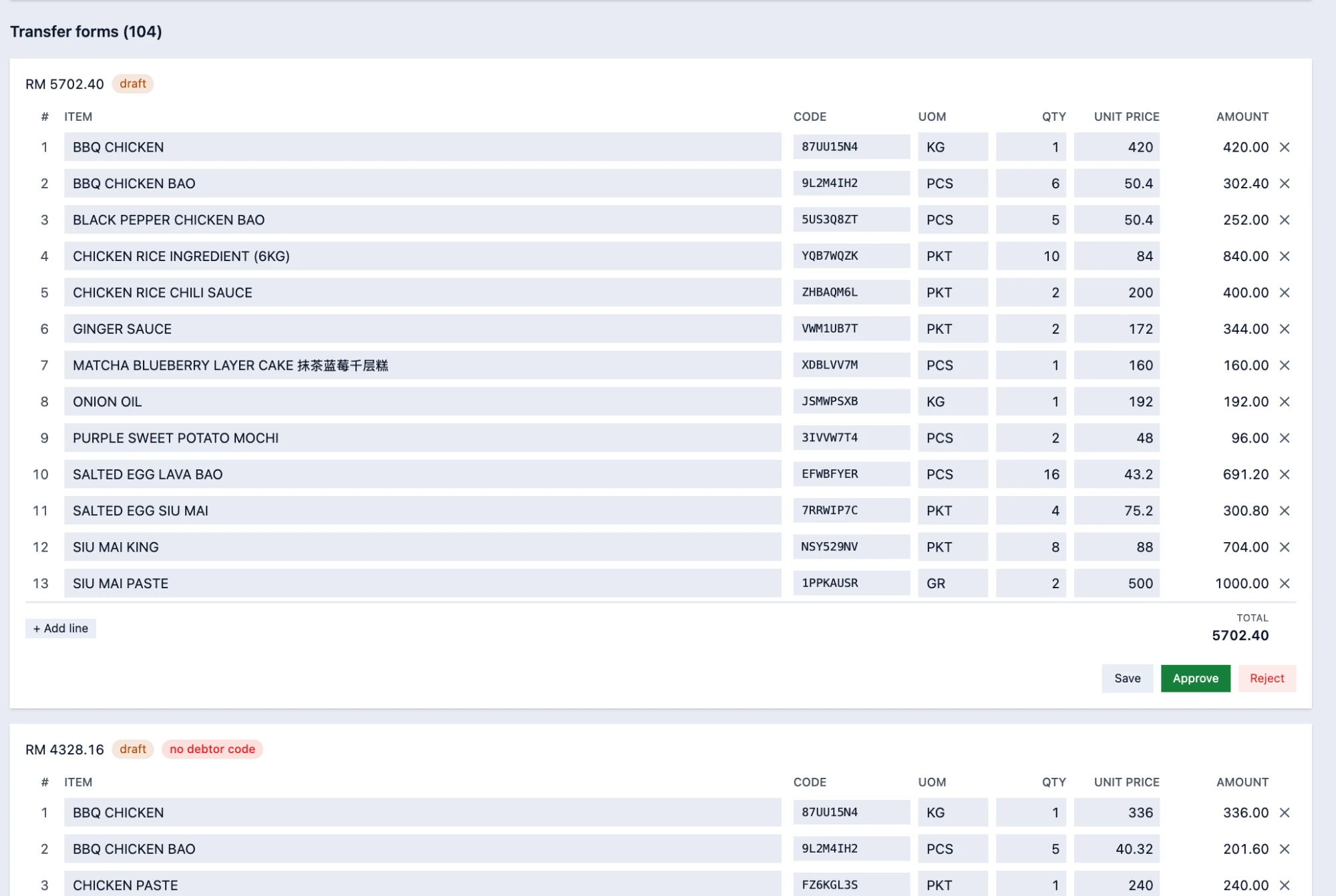
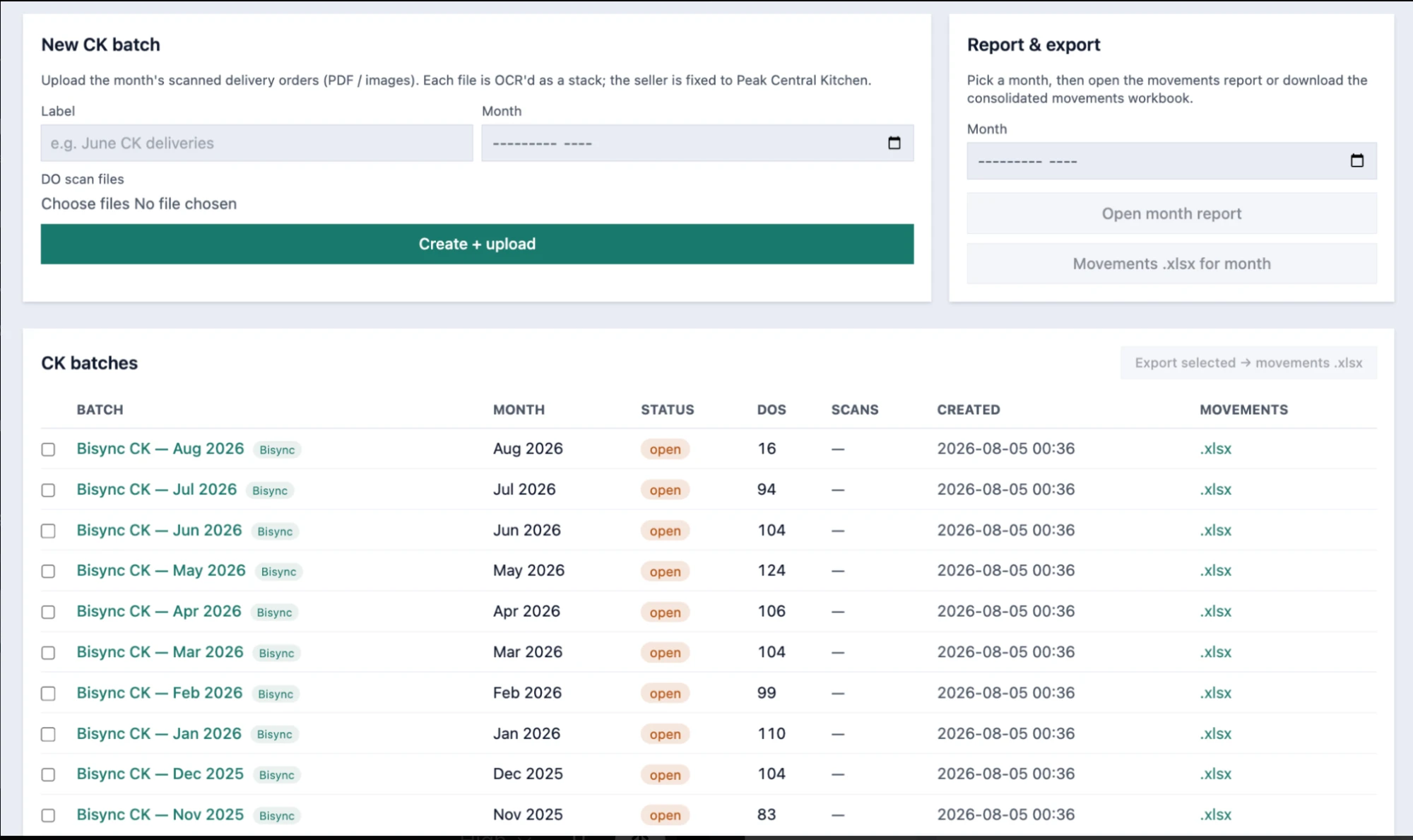
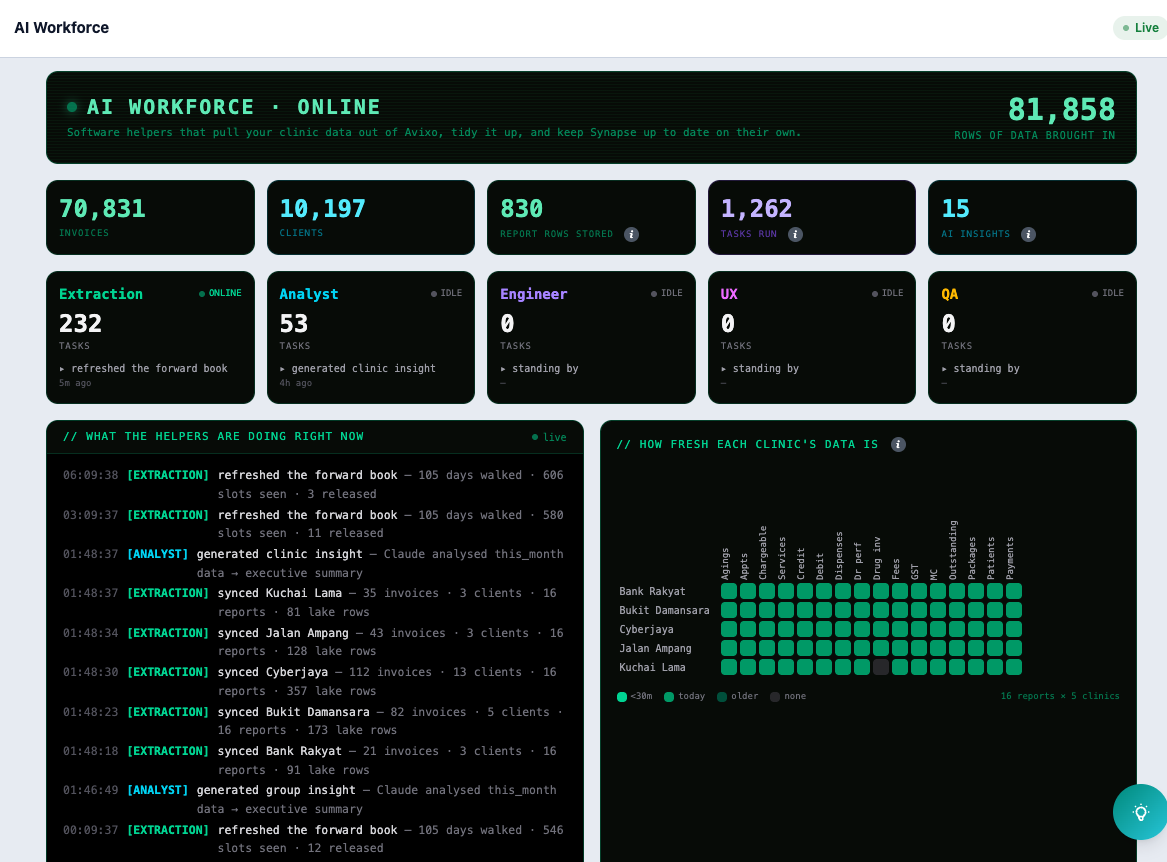
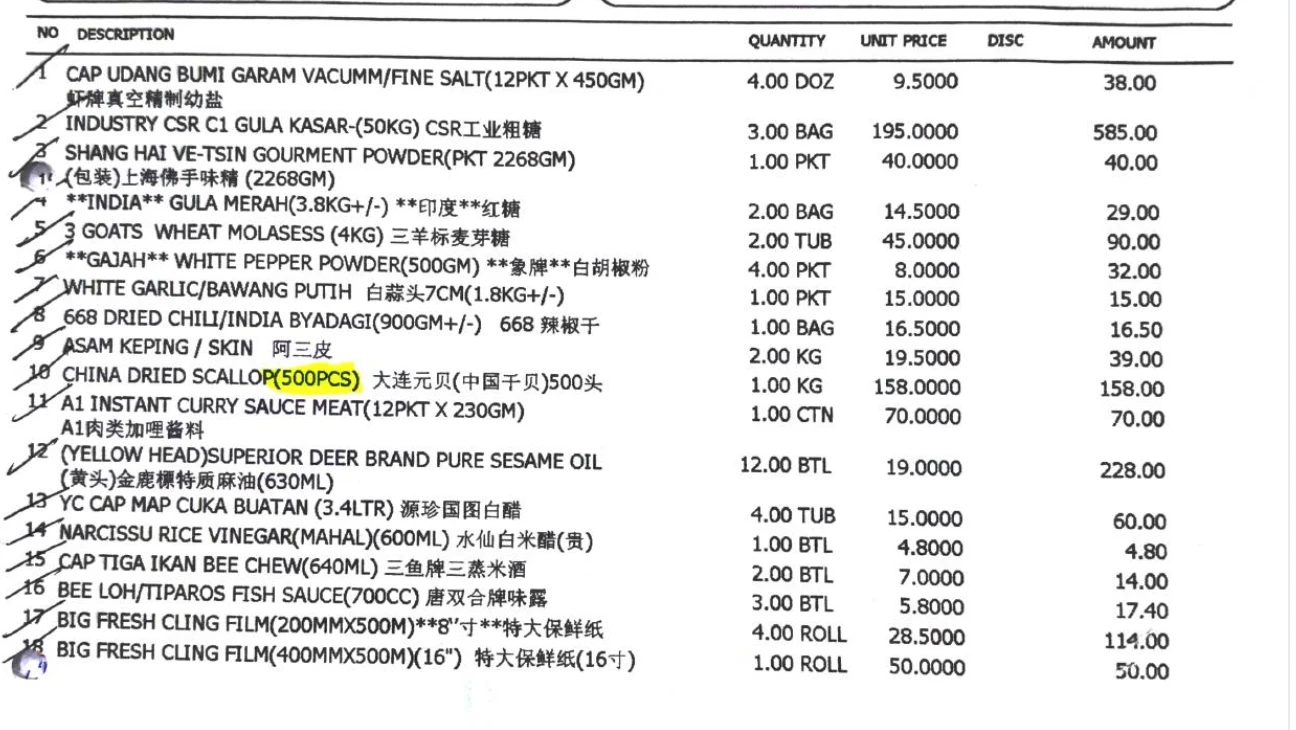
These are running right now

Not mockups and not a roadmap. Screens from systems doing this work today in other companies. Names, figures and anything identifying have been removed — which is also how yours would be treated.

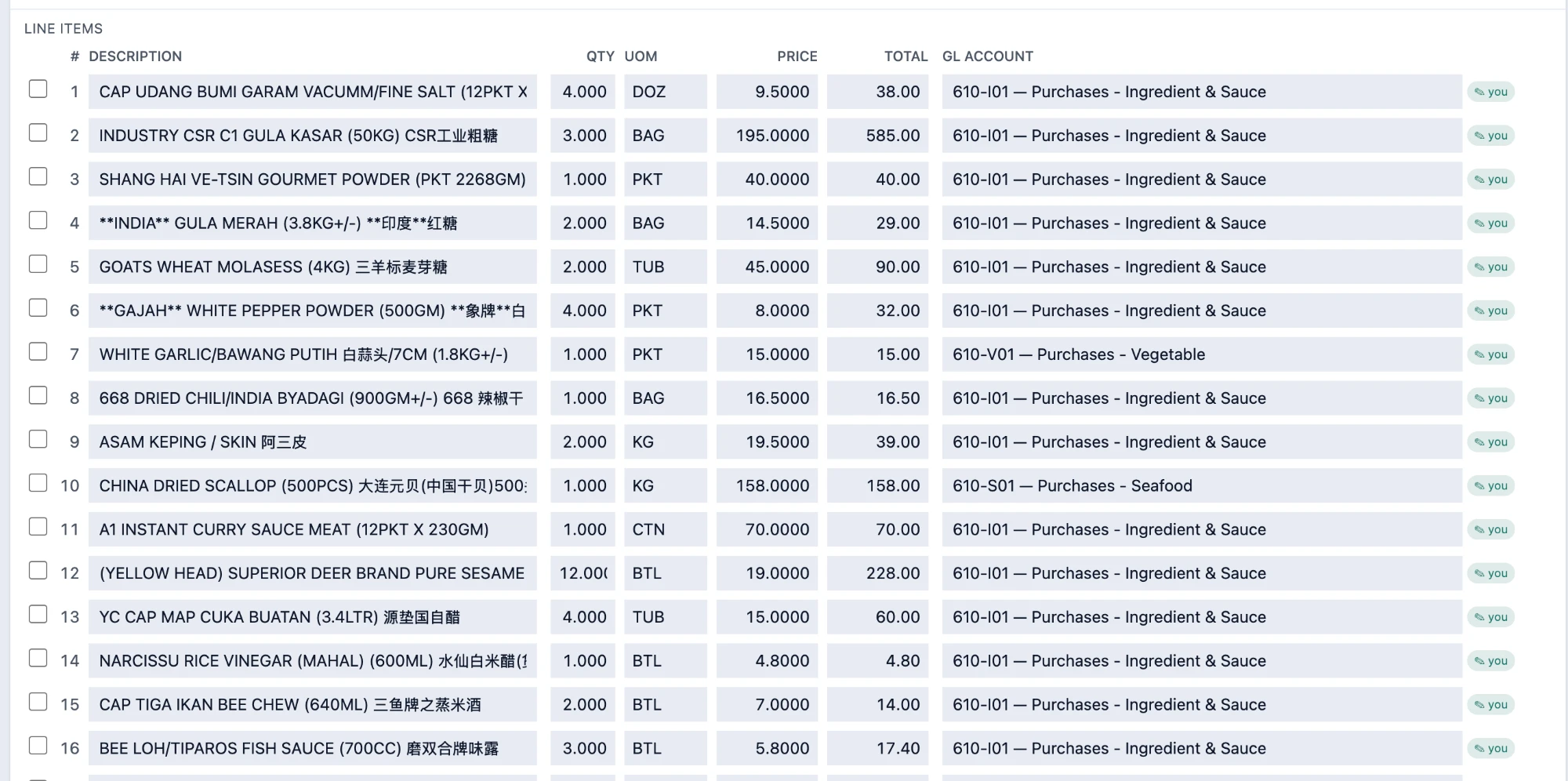
A scanned supplier invoice as it arrives
What arrives: a photographed invoice. No structure, no fields, nothing a system can use.
The same invoice read into structured line items
The same document a few seconds later: every line read, coded and matched, ready for one person to glance at and approve.
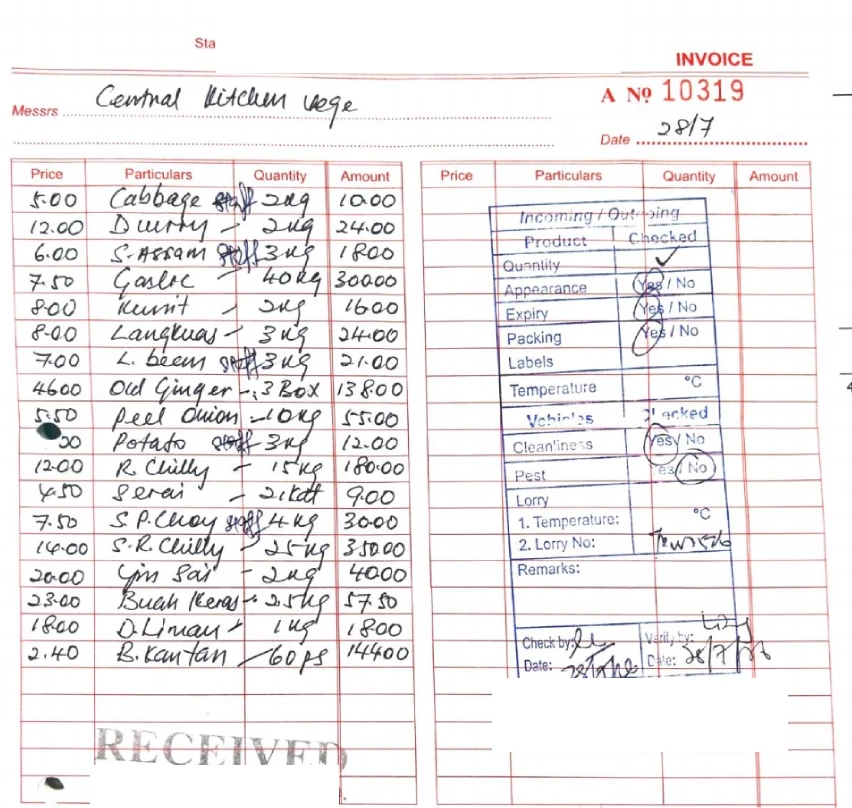
A handwritten delivery chit
Handwriting on a delivery chit — the case everyone assumes is impossible.
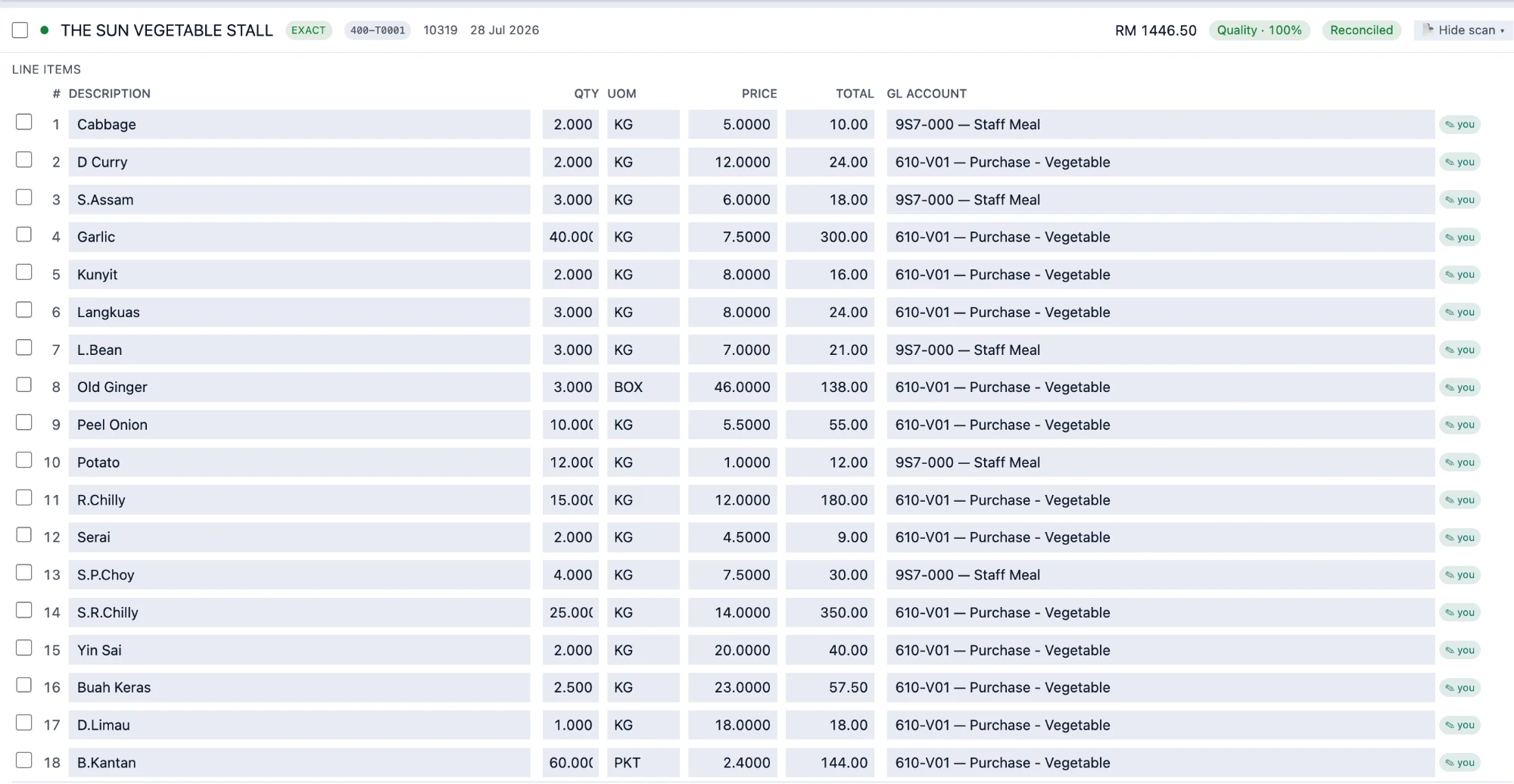
The handwritten chit read line by line
Read line by line, with anything doubtful flagged rather than guessed. Uncertainty is surfaced, not hidden.
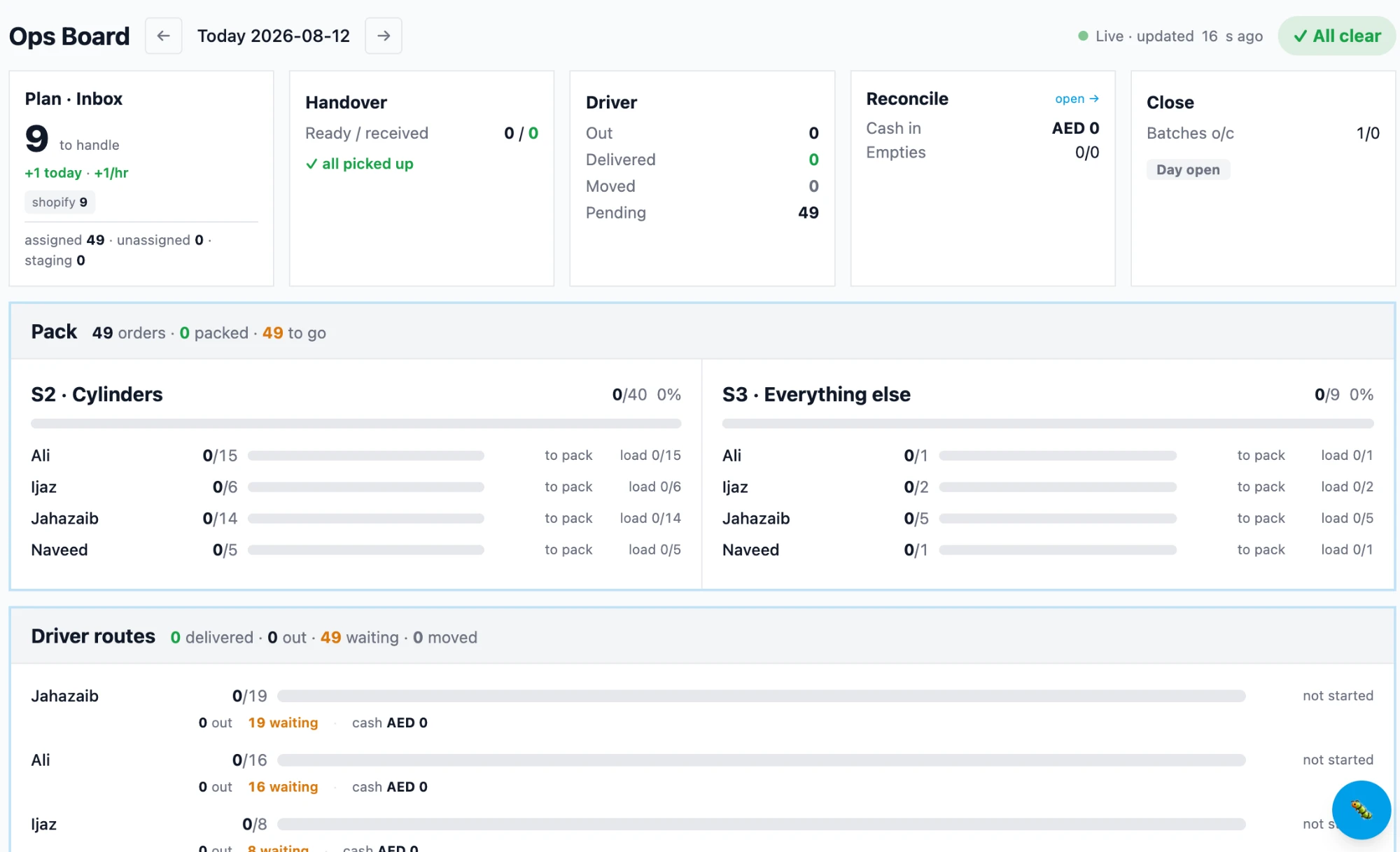
An operations board assembled automatically
An operations board that builds itself out of the day's messages and documents. Nobody maintains this by hand.
Movements matched across entities
Movements between related companies, matched across both sides automatically.
Automated cross-checks before posting
The cross-checks that run before anything is posted — the same idea as the HOD checker, applied to accounts.
Agents with defined jobs running on a schedule
Agents with defined jobs, running on a schedule. This is what "hiring an intern for the stupid work" actually looks like once it's real.
Live

The rest of this is easier shown than described — over to the screen.

Part four

Over to you

Two questions. Every HOD answers both. There are no wrong answers and nothing is being committed to today.

Question one

What is the thing your team does repeatedly that consumes an absurd amount of time?

Not the hardest thing you do. The most repetitive. The one where you already know the answer before you start, and it still takes all morning.

Question two

If you had one employee who could read every document, access every system, never forget anything, and work 24/7 — what would you give them?

Ignore whether it sounds possible. That instinct is calibrated to the old cost of software, and the old cost is what changed.

One or two workflows. Per department.

Not a transformation programme, not a platform, not a two-year roadmap. If every department leaves today with one or two workflows where we either save serious hours or directly make or save money, this hour has done its job.

Pick the job in your week that most looks like typing, and we'll tell you honestly whether it's worth automating and roughly what it takes.